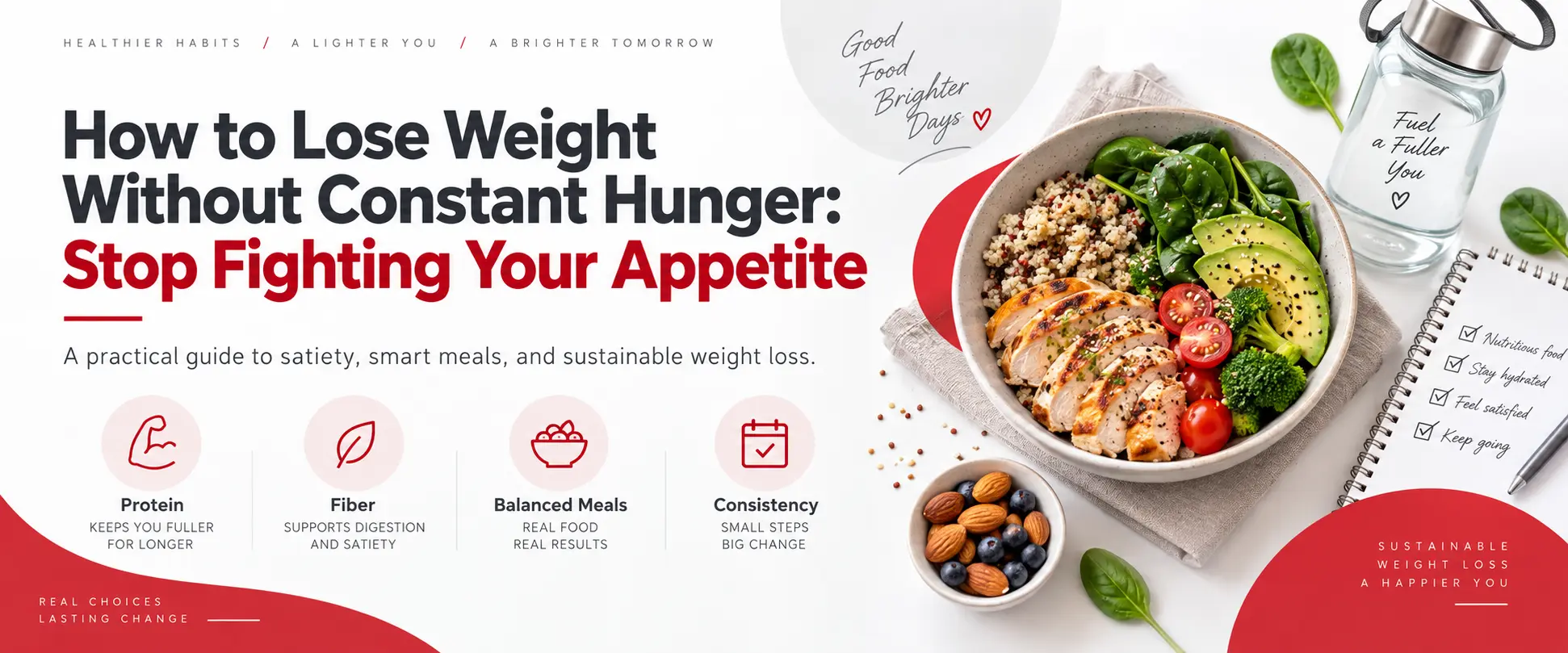
The biggest reason people quit weight loss programs isn’t lack of willpower. It’s constant hunger.
You’re in a calorie deficit. Your body wants more food. Every waking moment is spent fighting hunger and cravings. You’re miserable. After weeks of this, you quit.
Here’s what most people don’t realize: constant hunger isn’t inevitable. It’s a sign something in your approach needs adjustment. The right program should allow you to lose weight while managing hunger—not while battling it constantly.
This guide breaks down exactly why you’re hungry on typical weight loss programs—and how to actually lose weight without feeling like you’re starving.
Why Weight Loss Programs Make You So Hungry
Calorie Deficit Increases Hunger Hormones: When you eat fewer calories, your body releases more ghrelin (the hunger hormone) and less leptin (the satiety hormone). This is biological, not psychological. Your body is literally signaling for more food.[1]
Wrong Macronutrient Balance: Most people in calorie deficit focus on low-fat, low-calorie foods. These are often low in protein and low in satiety. You eat 400 calories and feel hungry an hour later.
Meal Timing Issues: Three meals spaced far apart leaves long periods of hunger. Constant snacking spikes cravings. Finding the right meal timing matters.
Inadequate Protein: Protein is the most satiating macronutrient. Without adequate protein, any calorie amount feels insufficient.
Liquid Calories: Eating calories (solid food) creates satiety. Drinking calories doesn’t. So drinking 200 calories of juice creates no satiety, but eating 200 calories of chicken creates significant satiety.
Stress and Sleep Issues: Poor stress management and inadequate sleep directly increase hunger hormones. You’re biologically hungrier when stressed and sleep-deprived.
Here’s the good news: almost all of these are fixable through strategic adjustments.
The Science Behind Satiety
Protein Creates the Most Satiety: Pound for pound, protein creates more feeling of fullness than carbs or fat. A 200-calorie chicken breast creates more satiety than 200 calories of bread.[2]
Whole Foods Create More Satiety Than Processed: A 300-calorie apple creates more satiety than 300 calories of candy. Nutrient density matters.
Adequate Calories With Right Macros Beat Extreme Restriction: 1,400 calories with high protein creates less hunger than 1,000 calories with low protein. The composition matters more than the absolute number.
Meal Frequency Can Reduce Hunger: Strategic meals and snacks prevent the extreme hunger of sparse eating.
Hydration Affects Hunger: Dehydration can feel like hunger. Proper hydration reduces false hunger signals.
How to Lose Weight Without Constant Hunger: Our Complete Strategy
Strategy #1: Maximize Protein at Every Meal
This is the #1 hunger management tool.
Your targets:
- Every breakfast should include protein (eggs, yogurt, protein shake)
- Every lunch should include protein (chicken, fish, beef, legumes)
- Every snack should include protein (our protein bar, yogurt)
- Every dinner should include protein (fish, beef, legumes)
Why this works:
Protein creates satiety that lasts hours. A high-protein meal keeps you full 4-5 hours. A low-protein meal has you hungry in 2 hours.
Your best sources: chicken breast, fish, lean beef, eggs, Greek yogurt, legumes, and our protein shakes and bars.
This isn’t negotiable for hunger management. Without adequate protein, you’ll be constantly fighting hunger.
Strategy #2: Optimize Your Calorie Range
Our 1,200-1,600 calorie range is specifically designed to avoid extreme hunger:
- It’s low enough to create meaningful deficit
- It’s high enough to avoid the hunger that comes with extreme restriction
- It includes convenient protein options that support satiety
Important: if you’re below 1,200 calories, you’ll likely be constantly hungry. That’s not a willpower issue—that’s a calorie issue. Increase to at least 1,200.
Strategy #3: Strategic Meal Timing
Instead of skipping meals and getting ravenously hungry, use strategic timing:
Example Daily Structure:
- Breakfast: protein + carbs (eggs + whole grain toast)
- Mid-morning snack: protein shake or bar
- Lunch: protein + vegetables + carbs (chicken + vegetables + brown rice)
- Afternoon snack: Greek yogurt or protein bar
- Dinner: protein + vegetables (fish + vegetables)
This structure prevents extreme hunger. You never go more than 3-4 hours without food. You never reach the “I’ll eat anything” desperation.
Strategy #4: Prioritize Whole Foods
Whole foods create more satiety per calorie than processed foods.
High-Satiety Foods (these keep you full):
- Lean proteins (chicken, fish, lean beef)
- Eggs
- Greek yogurt
- Legumes (beans, lentils)
- Vegetables (spinach, broccoli, carrots, peppers)
- Whole grains (brown rice, sweet potatoes, whole wheat bread)
- Our protein shakes and bars
Low-Satiety Foods (these leave you hungry):
- Refined carbs (white bread, regular pasta)
- Sugary foods (candy, pastries, desserts)
- Processed snacks (chips, crackers)
- Highly processed diet foods
Focus on high-satiety whole foods, and you’ll feel fuller on your calorie range.
Strategy #5: Optimize Your Beverage Choices
This is often overlooked but critical:
Reduce Empty Calories:
- Black coffee (or with unsweetened almond milk)
- Tea (black, green, herbal)
- Water
- Diet drinks (if you like them)
Avoid Hunger-Creating Beverages:
- Regular soda (spikes hunger)
- Juice (high calories, zero satiety)
- Specialty coffee drinks with high-calorie milk and syrups
- Sugary drinks
Use our protein shakes strategically as actual meals within your calorie range—not as extra calories.
Strategy #6: Include Strategic Snacking
Hunger management sometimes requires snacks. The key is choosing satiating options:
Hunger-Reducing Snacks:
- Our protein bars (designed for satiety)
- Greek yogurt
- Hard-boiled eggs
- String cheese
- Nuts (small portion)
- Our protein shakes
Avoid These Snacks:
- Rice cakes (zero satiety)
- Popcorn (low satiety)
- Crackers (hunger-inducing)
- Candy (spikes and crashes)
- Low-fat snack foods (designed to be less filling)
Strategy #7: Address Sleep and Stress
This is critical and often forgotten:
Poor Sleep Increases Hunger:
- 5-6 hours instead of 7-9 directly increases hunger hormones
- Poor sleep reduces willpower and decision-making
High Stress Increases Hunger:
- Stress increases cortisol, which increases hunger
- Stressed people crave comfort foods more intensely
The Fix:
- Prioritize 7-9 hours nightly
- Consistent sleep schedule
- Basic stress management (meditation, yoga, walking)
Many people think they have a hunger problem when they actually have a sleep/stress problem.
Strategy #8: Stay Hydrated
Dehydration can masquerade as hunger.
Simple strategy:
- Drink water with meals (creates volume, increases fullness)
- Drink water between meals (reduces false hunger signals)
- Aim for half your body weight in ounces daily
This costs nothing and significantly reduces perceived hunger.
What NOT to Do
Don’t Restrict Below 1,200 Calories
Extreme restriction makes hunger unbearable. Your calorie range should be sustainable.
Don’t Skip Meals
Skipping breakfast or lunch leads to desperate hunger by evening. Regular meals prevent this.
Don’t Eat Low-Protein
Low-protein diets leave you constantly hungry. It’s biological, not willpower.
Don’t Eat Processed Diet Foods
They’re designed to be low-calorie but leave you hungry. Whole foods work better.
Don’t Drink Your Calories
Calories from beverages don’t create satiety. Eat your calories, don’t drink them.
Don’t Ignore Sleep and Stress
These directly increase hunger. Optimizing them reduces appetite significantly.
Expected Hunger Changes
Week 1: Initial hunger as your body adjusts. Normal. Stay consistent.
Week 2-3: Hunger typically decreases as your body adapts and proper protein/meal timing kicks in.
Week 4+: Most clients report manageable hunger—not constant battling. They’re satisfied on their calorie range.
Individual experiences vary. If you’re still constantly hungry after week 3, review:
- Are you getting enough protein?
- Are you eating whole foods?
- Are you sleeping adequately?
- Are you stressed?
One of these is usually the culprit.
The Real Solution to Weight Loss Hunger
Constant hunger isn’t inevitable. It’s usually a sign your approach needs adjustment, not that weight loss is impossible for you.
The right calorie range (1,200-1,600), adequate protein, whole foods, strategic meal timing, and optimized sleep and stress management allows most people to lose weight without constant hunger.
This week: increase your protein, optimize your meal timing, improve your sleep, and manage your stress. Most people report significantly reduced hunger within days of these changes.
You shouldn’t be miserable to lose weight. You should be consistent.
Resource References:
[1] Sumithran, P., & Proietto, J. (2013). “Physiological Basis of Resistance to Weight Loss in Obesity.” Proceedings of the Nutrition Society, 72(4), 412-419.
[2] Leidy, H. J., et al. (2015). “The Role of Protein in Weight Loss and Maintenance.” The American Journal of Clinical Nutrition, 101(6), 1320S-1329S.
[3] Knutson, K. L., et al. (2007). “Association Between Sleep Duration and Increased Visceral Adipose Tissue.” International Journal of Obesity, 31(1), 23-29.
[4] Lattimore, P. R., et al. (2010). “Stress-Related Eating and Drinking and Their Effects on Dietary Composition.” Appetite, 54(1), 143-149.