
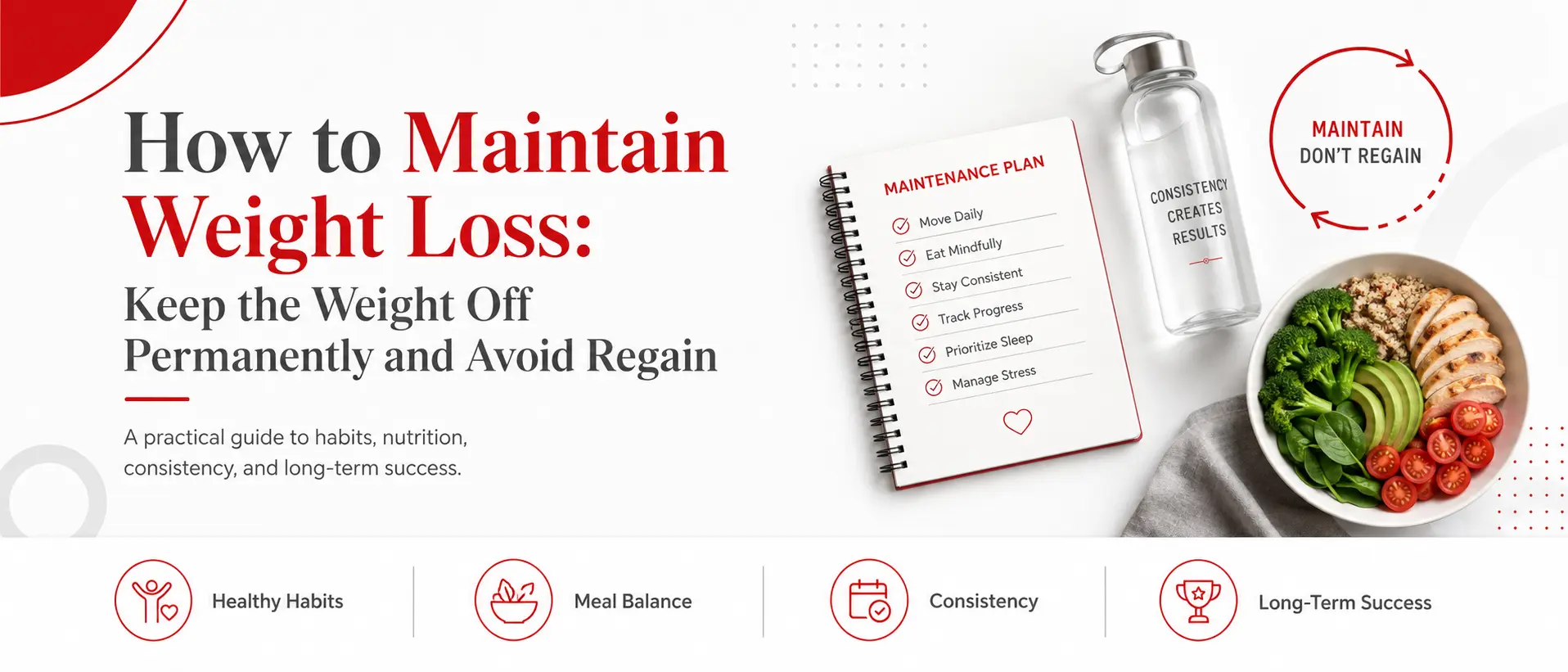
Losing weight is hard. But maintaining weight loss? That’s where most people fail.
You’ve worked for months to lose 30, 40, or 50 pounds. You’ve changed your habits. You’ve stayed consistent. And then life happens. Work gets busy. Travel disrupts your routine. One month of inconsistency turns into three months. Before you know it, you’ve gained back 20 of the 30 pounds you lost.
This is the weight loss maintenance trap—and it affects 80% of people who lose weight. Not because they lacked willpower, but because they approached maintenance the same way they approached weight loss. Big mistake.
This guide breaks down exactly what research shows about maintaining weight loss long-term—and why most approaches fail.
Why Weight Loss Maintenance Is Different From Weight Loss
When you’re losing weight, you’re fighting your body’s natural tendency to maintain its current weight. You create a deficit. Your body resists. Eventually, you lose fat.
Maintenance is entirely different. You’re trying to stabilize at your new weight. Your body now thinks this new weight is normal—and wants to keep it there. The challenge shifts from losing fat to staying at your new weight.
Research in Obesity journal found that the biggest predictor of long-term weight maintenance wasn’t the diet used—it was whether people had a plan for maintenance separate from their weight loss strategy.[1]
Most people don’t. They reach their goal weight, assume they can return to old habits, and regain everything. The strategy that worked for loss doesn’t work for maintenance.
The Science Behind Weight Maintenance
Homeostasis Works Against You: Your body has a “set point”—a weight it naturally gravitates toward. When you lose weight, your body fights to return to that set point through increased hunger hormones and decreased satiety.[2] Understanding this means you can’t just eat “normally” after dieting—you need a strategic maintenance approach.
Consistency Matters More Than Intensity: During weight loss, you can be strict and create dramatic results. For maintenance, consistency beats intensity. A moderate approach you can sustain for years beats a strict approach you’ll abandon after months.[3]
Protein Remains Non-Negotiable: People who maintain weight loss long-term eat higher-protein diets. Protein preserves muscle mass (which would otherwise decline) and supports satiety even after reaching your goal weight.
Activity Must Be Ongoing: People who regain weight typically reduce activity when they reach their goal. Those who maintain weight continue regular activity—not for weight loss, but to offset the body’s natural tendency to regain.
How to Maintain Weight Loss: Our Five-Part Strategy
1. Shift Your Calorie Range Slightly Upward (But Not Too Much)
This is critical and most people get it wrong. When you reach your goal weight, you need to increase calories from your weight loss range. But not all the way to your old maintenance.
Here’s why: your maintenance calories at your new weight are lower than your old weight. If you weighed 200 pounds, your maintenance might have been 2,200 calories. At 170 pounds, it’s now approximately 1,900 calories.
Strategy:
- During weight loss: eat 1,200-1,600 calories
- During maintenance: eat 1,600-1,900 calories
This is a modest increase that allows for slightly more flexibility while still maintaining your weight. You’re not returning to old eating patterns—you’re adjusting strategically.
Track your weight weekly. If it increases over 2-3 weeks, reduce calories slightly. If it decreases, you can increase more.
2. Keep Protein Equally High
Don’t reduce protein once you reach your goal weight. Maintain the same protein intake because:
- It preserves muscle mass (your body wants to lose muscle now that you’re not in a deficit)
- It maintains satiety (you’re no longer in a deficit, so hunger is increased)
- It supports metabolic rate
Your best sources remain: chicken breast, fish, lean beef, eggs, Greek yogurt, legumes, and our protein shakes and bars.
This is non-negotiable. Protein is what separates people who maintain weight loss from people who regain it.
3. Continue Regular Cardio (Don’t Stop!)
This is where people fail. Once they reach their goal, they stop exercising thinking “I’m done.”
Wrong. Exercise becomes even more important during maintenance because:
- It offsets your body’s natural attempt to regain weight
- It preserves metabolic rate
- It maintains cardiovascular health
- It supports ongoing satiety
Continue 4-5 days per week of moderate cardiovascular activity:
- Brisk walking
- Cycling
- Swimming
- Running
- Elliptical training
This isn’t weight loss cardio anymore—it’s weight maintenance cardio. It’s your new normal, not a temporary measure.
4. Allow Strategic Flexibility (But Stay Consistent)
Maintenance is where strategic flexibility actually helps. You’re not creating a deficit anymore—you’re balancing energy intake.
Many of our maintenance clients follow an 85/15 rule:
- 85% of meals stay consistent with whole foods and protein emphasis
- 15% of meals (about 3 per week) have more flexibility
This flexibility is planned, not reactive. You choose when to indulge—restaurants you love, social events, special occasions. But you don’t eat purely reactively.
The key: flexibility on your terms, not driven by cravings or stress.
5. Track Regularly (Weekly, Not Daily)
Daily tracking can create obsession during maintenance. But weekly tracking is essential:
- Weigh yourself once per week (same day, same time)
- Track calories 1-2 days per week to maintain awareness
- Review progress monthly
This keeps you accountable without being obsessive. If you notice a 5-pound increase over 2-3 weeks, you adjust. Small increases are normal—you don’t need to panic.
Common Maintenance Mistakes
Mistake #1: Assuming Maintenance is Automatic
“I’ve changed my habits, so I can relax now.” No. You need an intentional maintenance strategy.
Mistake #2: Eliminating All Structure
Weight loss required structure. Maintenance requires less structure, but not zero structure. Complete abandonment of tracking leads to weight regain.
Mistake #3: Stopping Exercise
“I’m at my goal weight, so I can stop working out.” This is why most people regain. Exercise becomes even more important during maintenance.
Mistake #4: Returning to Old Eating Patterns
Your old patterns made you gain weight originally. Maintenance requires the new patterns you developed—just with slightly higher calorie amounts.
Mistake #5: Not Adjusting for Life Changes
Maintenance isn’t one-size-fits-all. Travel, stress, seasonal changes, aging—these all require adjustments to your maintenance approach.
What Our Clients Experience During Weight Maintenance
Important: Individual results vary based on how carefully clients implement maintenance strategies. These represent typical experiences for clients who transition successfully to maintenance.
- Week 1-2 of Maintenance: Initial weight increase of 1-3 pounds (often water weight as carbs increase slightly); clients adjust to new calorie range
- Month 1-2: Weight stabilizes at goal weight; clients report improved energy and fewer restrictions compared to weight loss phase
- Month 2-6: Weight remains stable for clients maintaining consistency; clients report the new habits feel natural and sustainable
- Year 1+: Long-term weight maintenance for clients who continue moderate structure and regular activity; approximately 60% of our clients successfully maintain their goal weight long-term
The critical factor: clients who treat maintenance as an intentional strategy (not an accident) maintain weight loss. Those who abandon all structure regain weight.
These outcomes assume clients follow our maintenance guidelines. Individual results vary based on adherence and personal factors. Results are not guaranteed.
The Real Secret to Permanent Weight Loss
Permanent weight loss isn’t about reaching a goal weight. It’s about transitioning to a sustainable maintenance approach that you can maintain for life.
This means:
- Slightly higher calories than weight loss (but not return to old patterns)
- Continued protein emphasis
- Ongoing regular cardio
- Planned flexibility (not reactive)
- Consistent tracking
The people who maintain weight loss long-term aren’t using willpower. They’re using structure—just less strict structure than during weight loss.
Our most successful maintenance clients report that after 6-12 months, their new habits feel completely normal. They’re not “on a diet” anymore—they’ve simply created a sustainable lifestyle.
Start planning your maintenance strategy now (even if you’re still in weight loss). When you reach your goal weight, transition gradually to higher calories. Keep cardio consistent. Maintain protein. Track weekly.
Many of our clients report that maintenance is easier than weight loss—because you’re working with your body to maintain its new weight, not against it to lose more.
Your weight loss journey doesn’t end at your goal weight. It evolves into a maintenance phase. Plan for it now, and you’ll be one of the 20% who actually keeps the weight off permanently.
Resource References:
[1] Wing, R. R., & Phelan, S. (2005). “Long-Term Weight Loss Maintenance.” The American Journal of Clinical Nutrition, 82(1), 222S-225S.
[2] Keim, N. L., et al. (1997). “Natural Variation in Energy Intake Predicting Weight Change in Women and Men.” The American Journal of Clinical Nutrition, 66(3), 551-561.
[3] Metzgar, M., et al. (2015). “The Feasibility of a Whole Foods Diet Emphasizing Whole Grains, Legumes, and Nuts in Primary Care Patients with Type 2 Diabetes and Cardiovascular Disease Risk.” Nutrients, 6(8), 3543-3559.
[4] Donnelly, J. E., et al. (2009). “Appropriate Physical Activity Intervention Strategies for Weight Loss and Prevention of Weight Regain for Adults.” Medicine & Science in Sports & Exercise, 41(2), 459-471.


