
You were losing 3 pounds per week. The scale was moving consistently. You felt like the program was working.
Then suddenly… nothing. The scale hasn’t budged in two weeks. You’re doing everything the same, but the results stopped.
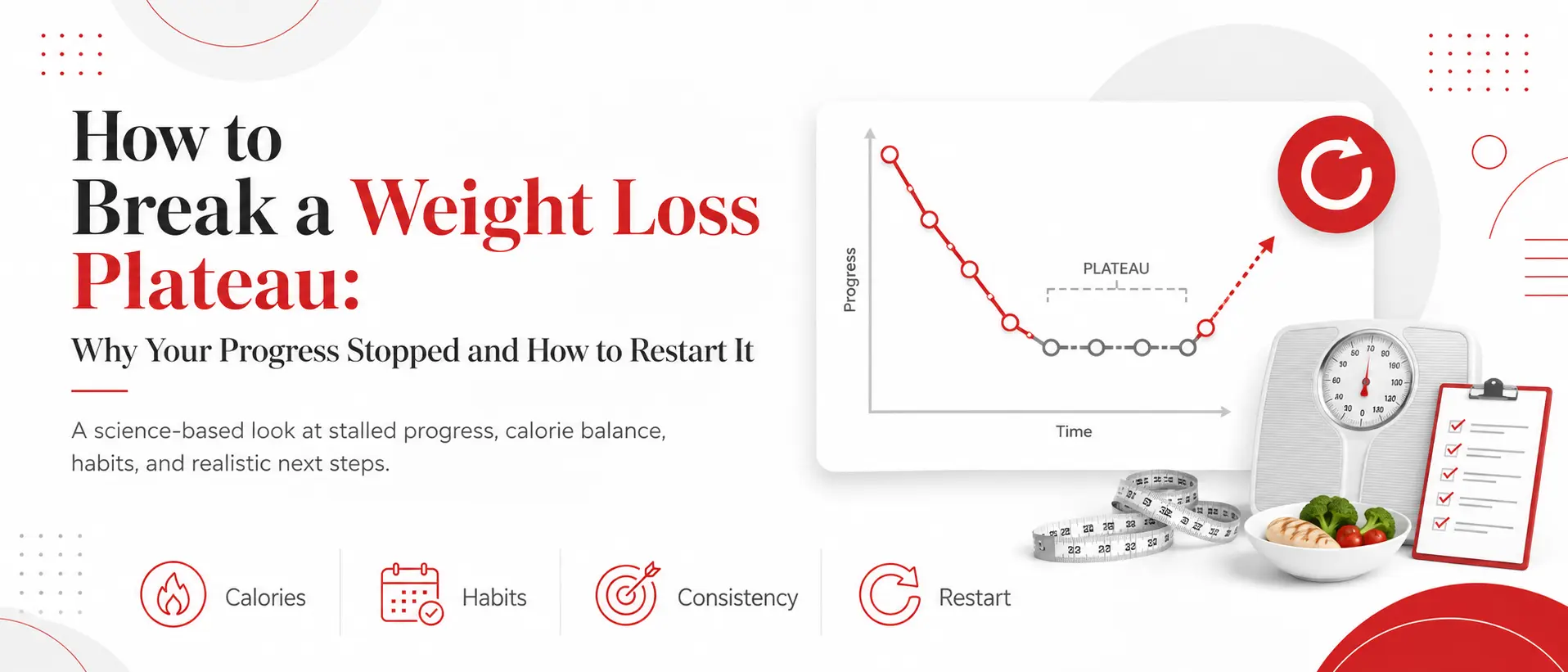
This is the weight loss plateau—and it’s the #1 reason people give up on otherwise successful programs. The frustration of doing everything right and seeing no progress is demoralizing. But here’s the truth: plateaus aren’t a sign your program is broken. They’re a sign your body has adapted to it.
The good news? Weight loss plateaus are predictable, fixable, and actually a sign you’ve made real progress. Here’s exactly what causes them and how to break through.
Why Weight Loss Plateaus Happen
Your body is incredibly adaptive. When you first start a calorie deficit, your body burns stored fat rapidly. But as you lose weight, your body requires fewer calories to function (a lighter body burns less energy).
Additionally, your body adapts to your current routine. The same cardio routine that burned 300 calories per session now burns 250 calories as your fitness improves and your body becomes more efficient.
This adaptation is called metabolic adaptation, and it’s completely normal. But it’s also completely manageable if you know what to do about it.
Research in the International Journal of Obesity shows that weight loss plateaus typically occur after 4-12 weeks of consistent dieting, depending on starting weight and program adherence.[1]
The Science Behind Plateaus
Adaptive Thermogenesis: As you lose weight, your body naturally reduces energy expenditure. A 200-pound person burns more calories at rest than a 180-pound person. This is automatic—not a sign of a “slow metabolism.”[2]
Exercise Adaptation: The same workouts become easier and burn fewer calories over time as your cardiovascular fitness improves. Your body adapts to the stimulus.
Hormonal Adaptation: Weight loss triggers hormonal changes (increased ghrelin, decreased leptin) that increase hunger. This is your body trying to restore lost weight.
Dietary Adherence Drift: Many people unknowingly increase calorie intake slightly after weeks of restriction, reducing or eliminating their deficit.
How to Break a Weight Loss Plateau: Five Proven Strategies
1. Recalculate Your Calorie Needs
This is the most commonly overlooked step. As you lose weight, your maintenance calorie needs decrease. Your 1,200-1,600 calorie range may need adjustment based on your new weight.
Here’s what happens: you started at 200 pounds, and 1,400 calories created a 600-calorie deficit. Now you’re at 180 pounds, and that same 1,400 calories only creates a 300-calorie deficit because your maintenance calories have decreased.
Solution: recalculate your maintenance calories using an online calculator, then adjust your target range accordingly. You may need to eat closer to 1,200 instead of 1,600, or make dietary adjustments.
2. Increase Protein Slightly
If you’ve been maintaining adequate protein but progress stalled, a small increase can help. Higher protein:
- Increases satiety (you feel fuller)
- Increases thermic effect (more calories burned digesting it)
- Preserves muscle during weight loss
- Can restart fat loss through hormonal optimization
If you’ve been at moderate protein, try increasing it slightly. Many of our clients find that adding an extra protein shake or bar per day restarts their progress.
Best sources: chicken breast, fish, lean beef, eggs, Greek yogurt, legumes, and our protein shakes and bars.
3. Vary Your Cardio Routine
Your body adapts to the same cardio. If you’ve been walking 30 minutes daily, your body now burns fewer calories doing it than week 1.
Solution: change your cardio stimulus:
- Switch from walking to cycling
- Add one higher-intensity session weekly (brisk interval walking, not extreme)
- Increase duration from 30 to 40 minutes
- Change terrain (hills vs. flat)
- Vary the time of day
You don’t need to do anything extreme—just vary the stimulus enough that your body has to adapt. This restarts calorie burn and often restarts fat loss.
4. Address Sleep and Stress (The Hidden Plateau Causes)
Weight loss plateaus often coincide with lifestyle stress that disrupts sleep. Poor sleep:
- Increases hunger hormones
- Reduces motivation for cardio
- Increases cortisol, which promotes fat retention
- Impairs dietary adherence
If your plateau coincides with increased work stress or poor sleep, this is likely the culprit.
Solution:
- Prioritize 7-9 hours nightly
- Implement basic stress management
- Review sleep quality (dark room, cool temperature, consistent schedule)
Many clients find that improving sleep alone restarts their progress without any other changes.
5. Consider a Brief Calorie Increase (Strategic Refeed)
This might sound counterintuitive, but sometimes a strategic increase can restart a plateau. Eating at maintenance for 3-4 days:
- Resets hunger hormones
- Restores depleted muscle glycogen
- Signals your body that resources are available (reducing metabolic adaptation)
- Can restart progress when resumed
This isn’t permission to eat whatever you want. It’s a strategic 3-4 day increase to maintenance within your program guidelines, then return to your deficit.
Many of our clients report that a strategic maintenance week actually restarts their plateau and progress resumes when they return to their normal 1,200-1,600 range.
Mistakes People Make When Facing a Plateau
Mistake #1: Going Extremely Low-Calorie
When progress stops, many people drop to 1,000 calories or less. This backfires. Extreme restriction increases cortisol and metabolic adaptation, making plateaus worse.
Mistake #2: Adding Excessive Exercise
Others add hours of exercise thinking more activity is the answer. Overtraining increases stress and cortisol, which can actually stall fat loss.
Mistake #3: Changing Everything at Once
Modifying calories, exercise, diet, and sleep simultaneously makes it impossible to identify what worked. Change one variable at a time.
Mistake #4: Assuming the Program Stopped Working
Plateaus are normal and temporary—not evidence your program is broken. Most plateaus last 2-4 weeks before progress resumes.
Mistake #5: Giving Up
This is the most common mistake. People plateau, get frustrated, and quit—often right before progress would have restarted.
What Our Clients Experience During Plateaus
Important: Plateau duration and solutions vary individually. This represents typical client experiences.
- Week 1-2 of plateau: Scale doesn’t move, but clients often report feeling leaner or fitting clothes differently (body recomposition)
- Week 2-3: After implementing one of these strategies, progress typically resumes
- Week 4+: If plateau persists beyond 4 weeks with no changes, a more significant adjustment is needed
The key insight: plateaus are temporary and fixable. Clients who stay consistent through a plateau and make one strategic adjustment almost always restart progress.
Plateau duration and resolution depend on individual factors. Results are not guaranteed, but these strategies represent evidence-based approaches backed by client outcomes.
The Plateau Perspective Shift
Here’s what most people don’t realize: reaching a plateau means you’ve made real progress. Your body adapted to your new weight because you actually lost weight. That’s success, not failure.
The plateau isn’t a sign to quit—it’s a signal to adjust. Make one small change: recalculate calories, increase protein, vary cardio, improve sleep, or take a strategic refeed.
Most plateaus break within 2-3 weeks of implementation. You’re usually closer to breakthrough than you think.
Stay consistent. Adjust strategically. Trust the process.
Many of our clients report that breaking their first plateau was the confidence boost that kept them going to their goal. The plateau becomes proof that the system works—you just needed to adapt.
Resource References:
[1] Sumithran, P., & Proietto, J. (2013). “Physiological Basis of Resistance to Weight Loss in Obesity.” Proceedings of the Nutrition Society, 72(4), 412-419.
[2] Rosenbaum, M., et al. (2008). “Long-Term Persistence of Adaptive Thermogenesis in Subjects Who Have Maintained a Reduced Body Weight.” The American Journal of Clinical Nutrition, 88(4), 906-912.
[3] Donnelly, J. E., et al. (2009). “Appropriate Physical Activity Intervention Strategies for Weight Loss and Prevention of Weight Regain for Adults.” Medicine & Science in Sports & Exercise, 41(2), 459-471.
[4] Knutson, K. L., et al. (2007). “Association Between Sleep Duration and Increased Visceral Adipose Tissue.” International Journal of Obesity, 31(1), 23-29.


