
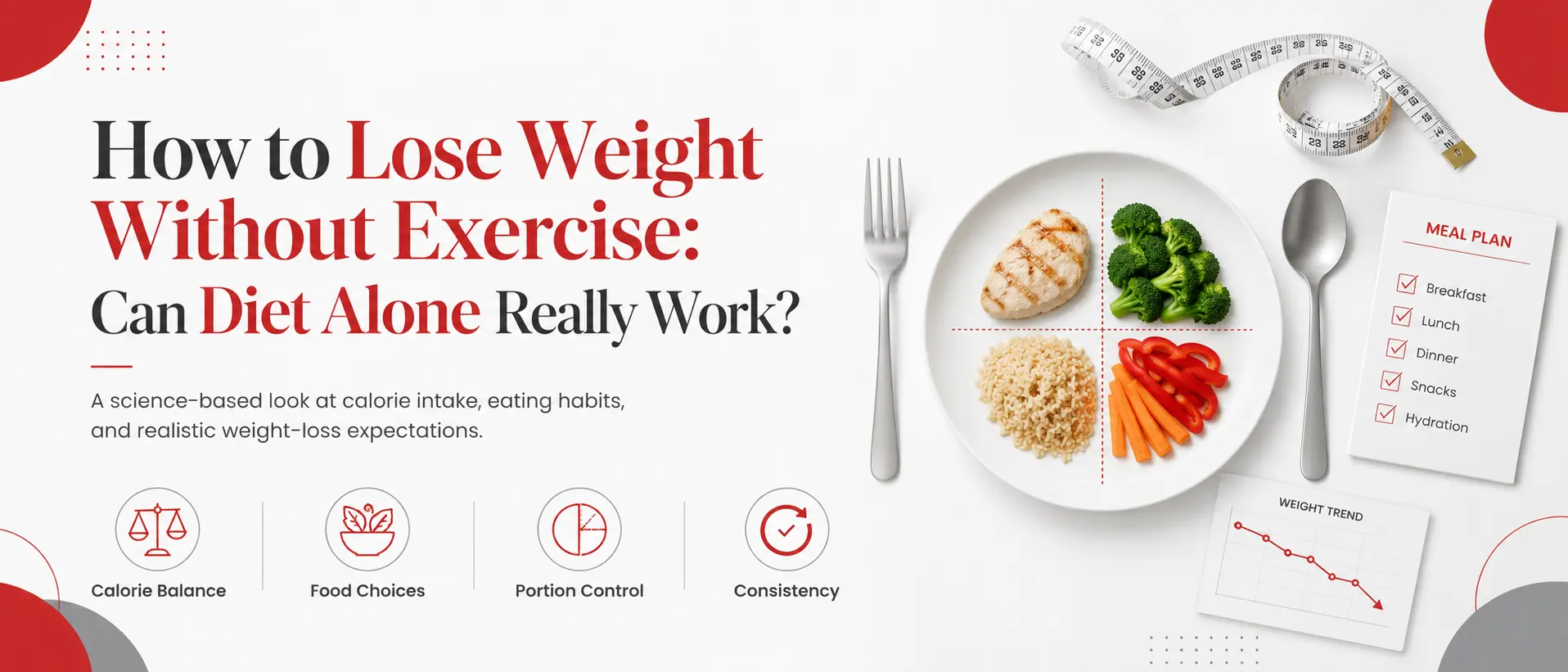
The question is asked thousands of times per month: “Can I lose weight without exercise?”
The short answer: yes. Weight loss fundamentally comes down to calories in versus calories out. You can create a calorie deficit through diet alone and lose fat without ever setting foot in a gym or doing a cardio session.
But here’s what most people don’t realize: losing weight without exercise and losing weight sustainably are two different things. This guide breaks down exactly what research shows about diet-only weight loss, why it works (and doesn’t), and the realistic approach our most successful clients use.
The Science: Can You Lose Weight Through Diet Alone?
Yes, Caloric Deficit is the Only Requirement for Fat Loss: Research is unambiguous on this point. A study in the New England Journal of Medicine found that weight loss depends entirely on caloric balance, not on exercise.[1] You can lose weight eating 1,500 calories while sedentary, just as you can while exercising.
But Here’s What Changes Without Exercise: Without physical activity, you’re relying entirely on diet to create your deficit. This creates several challenges:
- Your metabolic rate may decrease more significantly (your body loses muscle along with fat)
- You have zero buffer for occasional overeating (all your deficit comes from restriction)
- You’re more likely to experience metabolic adaptation that slows fat loss over time
- Hunger management becomes harder without the appetite-suppressing effects of cardio
In short: diet-only weight loss works, but it’s harder, slower, and less sustainable than a combined approach.
The Reality of Diet-Only Weight Loss
What Research Shows: Studies comparing diet-only versus diet-plus-exercise weight loss found that both groups lost similar amounts of weight initially, but the diet-plus-exercise group:
- Lost more fat (less muscle loss)
- Maintained higher metabolic rates
- Had better long-term adherence
- Reported fewer cravings and better satiety[2]
The Problem Most People Face: When you lose weight through diet alone, you’re fighting constant hunger. Your body is in a calorie deficit, so hunger hormones are elevated. Without the appetite-suppressing effect of physical activity, you’re battling that hunger constantly.
This is why diet-only approaches have such high failure rates. Not because people lack willpower, but because they’re fighting biology without tools to manage it.
How to Lose Weight Without Exercise (But Why You Might Not Want To)
1. Create Your Caloric Deficit Through Diet
If you’re going diet-only, your entire deficit comes from food intake. Our 1,200-1,600 calorie daily range creates a meaningful deficit without being so extreme that it’s unsustainable through diet alone.
This range:
- Creates 1-1.5 pound weekly fat loss (slower than combined approaches, but still meaningful)
- Is achievable without extreme hunger
- Includes our protein shakes and bars for convenience
The math is simple: if your maintenance is 2,000 calories, eating 1,200-1,600 creates a 400-800 calorie deficit daily.
2. Prioritize Protein (Non-Negotiable)
Without exercise to preserve muscle, adequate protein becomes even MORE critical. Protein:
- Prevents muscle loss during weight loss
- Increases satiety (fewer cravings)
- Has the highest thermic effect (more calories burned digesting it)
Focus your diet entirely on:
- Lean proteins: chicken breast, fish, lean beef, eggs
- Greek yogurt
- Legumes: beans, lentils, chickpeas
- Our protein shakes and bars
Without adequate protein, diet-only weight loss results in more muscle loss, which means a slower metabolism long-term.
3. Choose Whole Foods (No “Diet” Foods)
Ultra-processed diet foods are designed to be low-calorie but don’t satisfy hunger. Real, whole foods:
- Keep you fuller longer
- Stabilize blood sugar
- Reduce cravings
- Provide actual nutrition
Your diet should consist of:
- Lean proteins: chicken breast, fish, lean beef
- Vegetables: spinach, carrots, green beans, bell peppers, broccoli
- Complex carbs: brown rice, sweet potatoes, whole wheat bread
- Legumes: beans, lentils for plant-based protein
- Convenience: Our protein shakes and bars
This combination keeps you satisfied on fewer calories.
4. Track Your Intake Obsessively
Without exercise providing a calorie buffer, tracking becomes non-negotiable. You need to know exactly what you’re consuming because every calorie counts toward your deficit.
Use a food tracking app for at least the first month. This builds awareness and prevents the “hidden calorie” problem where people think they’re in a deficit but aren’t.
5. Prioritize Sleep and Stress Management
These become even MORE important without exercise. Exercise naturally manages stress and improves sleep. Without it, you need to be intentional:
- 7-9 hours of sleep nightly (poor sleep increases hunger hormones dramatically)
- Stress management through meditation, yoga, or breathing exercises
- Consistent sleep schedule
Poor sleep without exercise is a recipe for failure because hunger becomes unmanageable.
The Diet-Only Reality: What Clients Actually Experience
Important: Individual results vary. These represent typical experiences for clients following diet-only approaches strictly.
Week 1-2: Initial weight loss of 3-5 pounds as calorie deficit takes effect
Week 3-4: Approximately 1-1.5 pounds per week of weight loss (slower than combined approaches)
Month 2-3: Results continue but often plateau more significantly. Many clients report increased hunger and cravings as their body adapts to chronic restriction.
Month 3+: Long-term adherence becomes the challenge. Without exercise to manage hunger and preserve metabolism, many clients find the restriction increasingly difficult to maintain.
These outcomes assume consistent adherence to the 1,200-1,600 calorie range. Individual results vary based on metabolism, starting point, and consistency.
Why Adding Cardio Changes Everything
Here’s what happens when clients add even light cardio to their diet:
- Hunger decreases: Cardio has a natural appetite-suppressing effect
- Metabolism stays higher: Muscle is preserved, metabolic rate doesn’t tank
- Fat loss accelerates: You lose more fat and less muscle
- Adherence improves: People find the program easier to stick with
- Results appear faster: Same time investment, better outcomes
This is why our most successful clients combine diet with consistent cardio. You get:
- Faster fat loss
- Better body composition
- Fewer cravings
- Higher long-term success rates
The Honest Truth About Diet-Only Weight Loss
Yes, you can lose weight without exercise. Your body doesn’t know the difference between a calorie deficit from diet or from exercise—fat loss happens either way.
But sustainable weight loss? Better body composition? Fewer cravings? Easier long-term adherence? That’s where adding cardio makes all the difference.
Our most successful clients aren’t doing extreme workouts. They’re simply adding 30 minutes of moderate cardio 4-5 times per week alongside their 1,200-1,600 calorie diet. That combination creates dramatically better results than diet alone.
The practical answer: You can lose weight without exercise, but you’ll struggle more and progress slower. Add even light cardio, and everything changes.
Start with consistency in your diet. Stay within 1,200-1,600 calories. Eat adequate protein. Get good sleep.
Then add cardio when you’re ready—and watch your results accelerate.
Resource References:
[1] Sacks, F. M., et al. (2009). “Comparison of Weight-Loss Diets with Different Compositions of Fat, Protein, and Carbohydrates.” New England Journal of Medicine, 360(9), 859-873.
[2] Ross, R., et al. (2015). “Importance of Assessing Cardiorespiratory Fitness in Clinical Practice: A Case for Fitness as a Clinical Vital Sign.” Circulation, 134(24), e653-e699.
[3] Donnelly, J. E., et al. (2009). “Appropriate Physical Activity Intervention Strategies for Weight Loss and Prevention of Weight Regain for Adults.” Medicine & Science in Sports & Exercise, 41(2), 459-471.
[4] Knutson, K. L., & Van Cauter, E. (2008). “Associations Between Sleep Loss and Increased Risk of Obesity and Diabetes.” Annals of the New York Academy of Sciences, 1129, 287-304.


